


The technical structuring of truck insurance requires compliance with federal transportation regulations. An adequate policy must cover primary liability, physical damage to the tractor and trailer, as well as motor truck cargo insurance, ensuring the operating license and business continuity.
When it is worth it?
Beyond the legal obligation to operate commercially on highways, purchasing extended coverage limits is strictly necessary due to the high-risk litigation environment. For carriers of all sizes, this investment mitigates the risk of severe financial losses and meets the strict contractual requirements imposed by freight brokers and logistics operators.
Main operational risks
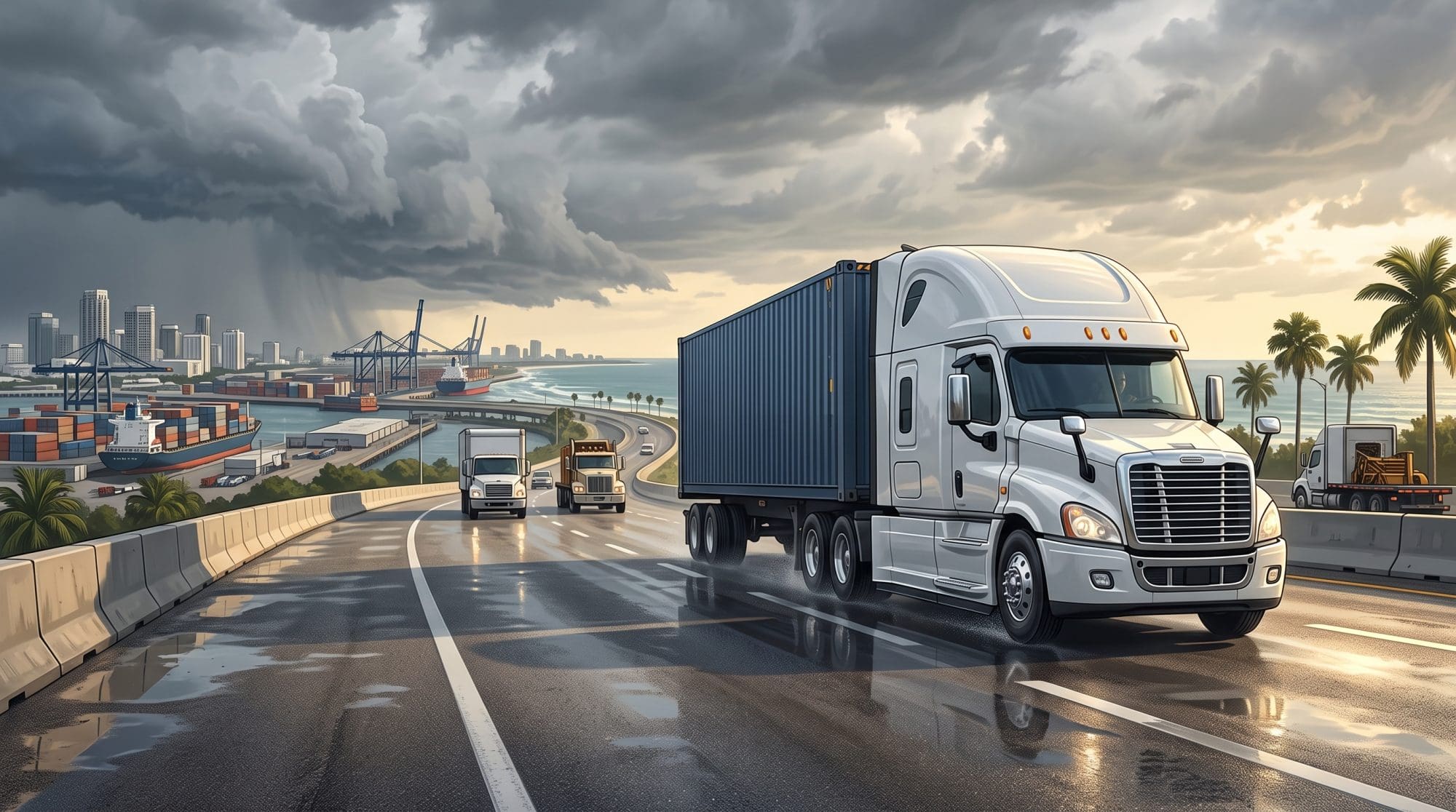
The logistics infrastructure of coastal and high-traffic regions presents acute exposures, such as high-density highway traffic and severe climate risk. The frequency of tropical storms and flash floods requires the activation of comprehensive coverages, designed to protect equipment against events unrelated to direct collisions, such as structural flooding and severe weather damage.
Common contracting mistakes
A serious technical error in the market is configuring the policy only with the minimum legal limit required for primary liability, ignoring that the standard contractually required by shippers and port facilities is usually substantially higher. Another frequent deviation is the confusion regarding non-trucking use coverage, creating severe protection gaps when the vehicle travels unattached outside of an official dispatch route.
Practical examples
In practice, if a truck is dispatched to pick up containers at marine terminals operating under a trailer interchange agreement, physical damage coverage focused only on the owner’s vehicle will not indemnify third-party chassis. Without this specific interchange clause, the carrier fully absorbs the financial liability for any damage caused to third-party equipment during transit.
The architecture of a commercial fleet insurance policy demands legal precision and operational adaptation. The alignment of liability coverages with federal requirements, coupled with the structuring of physical damage that contemplates climate risks and complex operational agreements, forms the technical foundation to sustain transportation operations with legal robustness.


